What is Calcium Silicate Board?
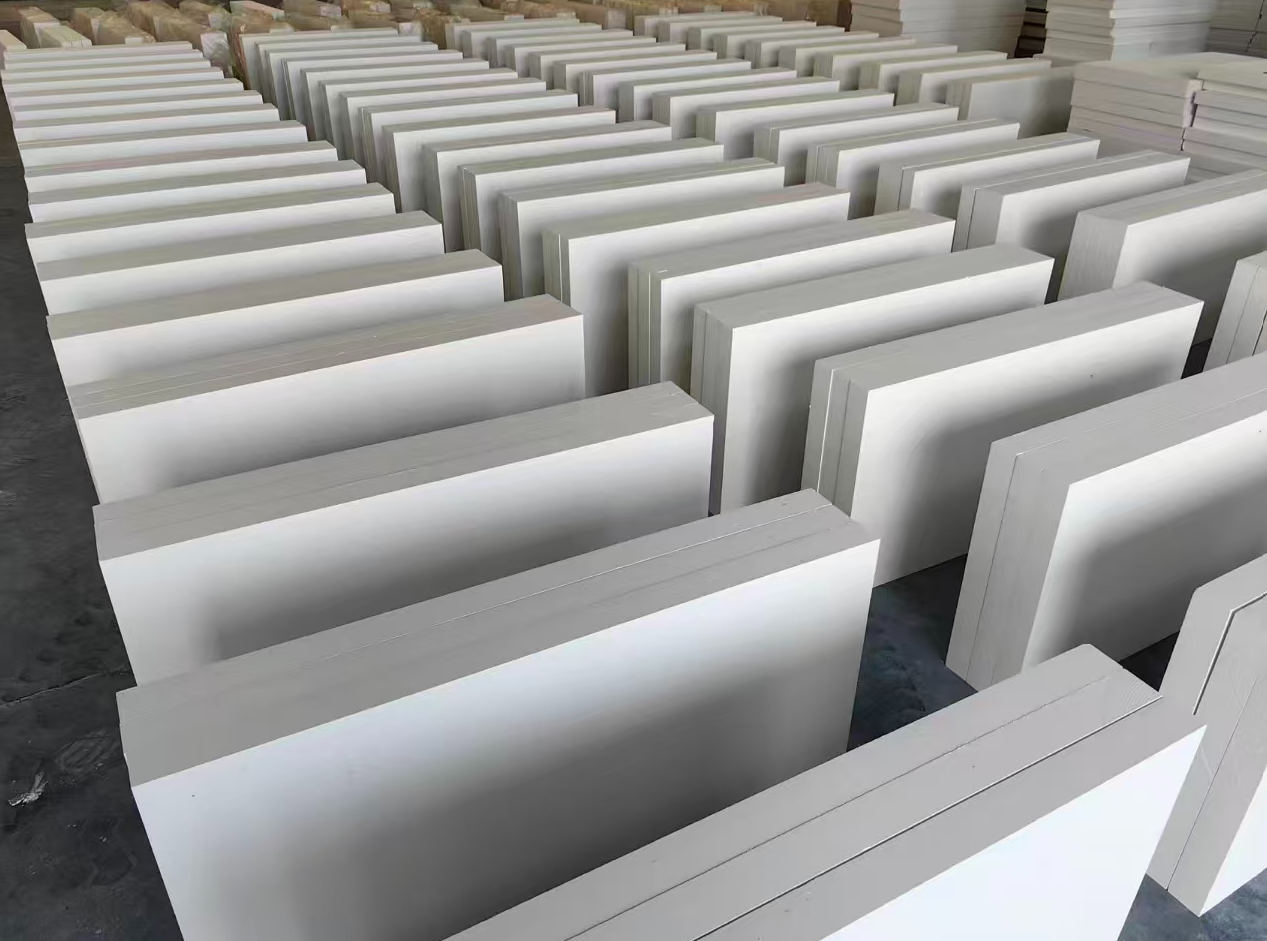
Calcium silicate board is a high-performance inorganic material widely used for thermal insulation, fire protection, and industrial applications. It is manufactured from silica, lime, and reinforcing fibers through high-temperature curing.
Due to its low thermal conductivity, high strength, and excellent fire resistance, it has become a preferred material in industries such as:
- Industrial furnaces
- Petrochemical plants
- Power stations
- Fire-rated duct systems
- Construction fireproofing
Calcium Silicate Board Manufacturing Process
The calcium silicate board manufacturing process typically includes the following steps:
- Raw Material Preparation
- Silica powder, lime, and fibers are mixed in precise ratios.
- Slurry Formation
- Water is added to create a uniform slurry.
- Sheet Forming
- The slurry is formed into sheets using molding or flow-on processes.
- High-Pressure Pressing
- Improves density and mechanical strength.
- Autoclave Curing
- Boards are cured under high temperature and pressure to achieve stable crystal structure.
- Drying & Cutting
- Final boards are dried, cut, and surface-finished.
Calcium Silicate Board Production Line & Equipment
A complete calcium silicate board production line includes:
- Raw material batching system
- Mixing system
- Sheet forming machine
- Hydraulic press
- Autoclave system
- Drying kiln
- Cutting and finishing equipment
For investors or factories, choosing the right calcium silicate board making machine directly affects:
- Production capacity
- Board density (low, medium, high density)
- Product quality consistency
High-Density Calcium Silicate Board
High-density calcium silicate board (typically 900–1100 kg/m³) is widely used in demanding environments:
- Steel and metallurgy industries
- Induction furnace lining
- Fire-rated duct systems
- High-temperature insulation (up to 1000°C–1100°C)
Key advantages:
- High compressive strength
- Excellent thermal insulation
- Long service life
- Resistance to thermal shock
Fire Rating & Fire Resistance Performance
One of the most important features is its fireproof capability.
Calcium silicate boards can achieve:
- Fire resistance up to 1000°C+
- Non-combustible (Class A1)
- Stable structure under long fire exposure
Typical applications:
- Fireproof walls
- Fire-rated ducts (e.g., 400°C for 2 hours systems)
- Fire doors
- Structural fire protection
Applications in Insulation & Industry
Calcium silicate insulation boards are widely used for:
Industrial Insulation
- Boilers
- Furnaces
- Kilns
- Petrochemical pipelines
Construction
- Fireproof partitions
- Ceilings
- External wall insulation
Special Applications
- Induction furnaces
- Aluminum and steel plants
- Marine fireproof systems
How to Choose a Reliable Calcium Silicate Board Supplier
When sourcing from a calcium silicate board factory, consider:
- Production capacity and equipment level
- Density range (low, medium, high density)
- Fire test certifications
- Export experience (especially EU market)
- Customization capability
Global Market Trends
Search trends show increasing demand for:
- Fireproof calcium silicate board
- High-density insulation materials
- Production line and manufacturing solutions
Especially in Europe and the Middle East, demand is growing for:
- Fire-rated duct systems
- Industrial insulation upgrades
- Energy-efficient building materials
Conclusion
Calcium silicate board is not just an insulation material—it is a core solution for fire safety and high-temperature environments.
Whether you are looking for:
- A reliable supplier
- A production line setup
- High-performance fireproof boards
Understanding the manufacturing process and product classification is essential for making the right decision.